Best Indoor Greenery for Compact Living Areas: Big Joy in Small Spaces

Chosen theme: Best Indoor Greenery for Compact Living Areas. Welcome to a cozy guide where tiny homes grow lush personalities. We’ll pair small-footprint plants with clever placement, warm stories, and practical care. Share your nooks, ask questions, and subscribe for weekly small-space plant inspiration.

Space‑Savvy Plant Heroes That Thrive in Tight Quarters

Low‑Light Champions

Snake plant, ZZ plant, and pothos handle dim corners like pros, keeping their footprint small while delivering lush presence. They tolerate inconsistent schedules, making them perfect for busy city life and micro‑apartments with limited natural light.

Compact Beauties for Shelves

Peperomia, hoya, and pilea offer sculptural leaves and gentle growth, ideal for narrow ledges. Their modest root systems stay comfortable in smaller pots, saving space while still giving you that satisfying daily burst of fresh, living texture.

A Studio Success Story

Maya moved into a 260‑square‑foot studio and adopted six compact plants. With one narrow bookcase and a sunny sill, her place felt suddenly alive. What’s your smallest successful plant placement? Comment below and inspire another tiny‑home grower.

Go Vertical: Hanging, Climbing, and Stacking Green

Use ceiling hooks, wall brackets, or tension rods to hang trailing pothos and philodendrons. Lightweight planters with drip trays protect floors, while staggered heights create layers of green without crowding windows or blocking that precious morning light.

Go Vertical: Hanging, Climbing, and Stacking Green

Slim trellises guide hoya and monstera adansonii upward, not outward. A single narrow frame behind a chair can become a living tapestry. Train a vine weekly, and you’ll shape a vertical sculpture that stays tidy and apartment‑friendly throughout the year.

Go Vertical: Hanging, Climbing, and Stacking Green

Stack systems or wall‑mounted planters turn blank walls into micro‑gardens. Choose shallow, lightweight units with removable liners for easy watering. Try a mix of textures—ferns up top, pothos mid‑level—to layer greenery without stealing a single square foot.

Understand Window Directions

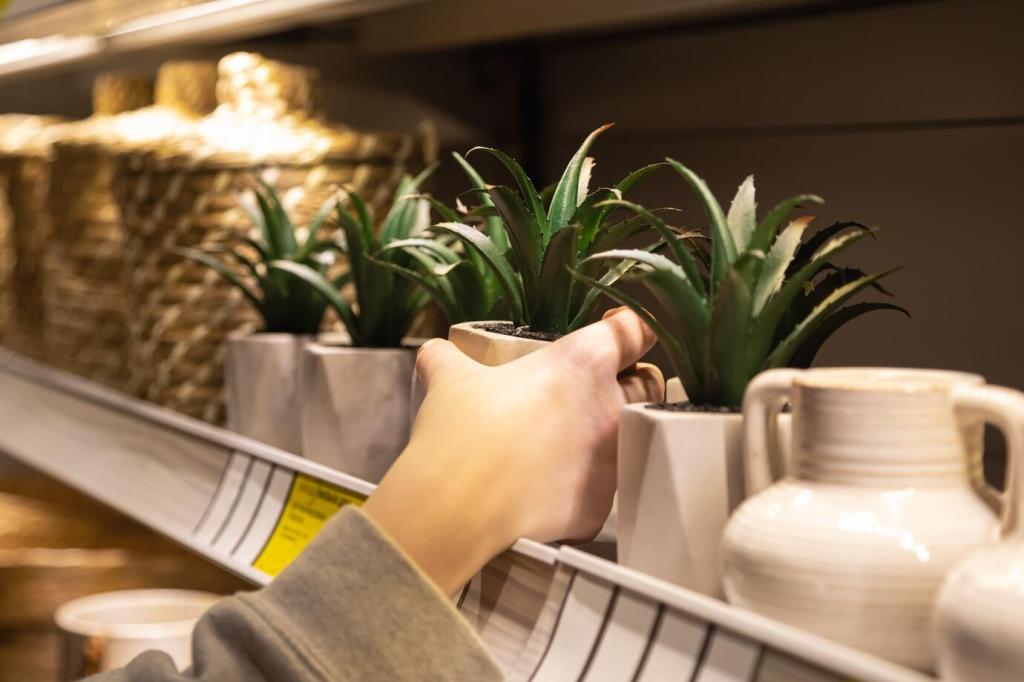
South and west windows suit sun‑loving succulents; north favors shade‑tolerant foliage like ZZ and snake plant. East light is gentle and balanced, perfect for peperomia. Move pots seasonally to maintain consistent exposure as daylight shifts throughout the year.

DIY Light Check with Your Phone

Use a phone lux meter app to gauge brightness at different times. Combine results with observation: leaf color, internode length, and growth rate. Add a mirror opposite your window to bounce more light deeper into the room without adding fixtures.

Watering, Soil, and Potting Strategies for Small Footprints

Choose pots one to two inches wider than the root ball to prevent soggy soil. Terracotta helps wick moisture, while nursery liners keep cleanup simple. A snug pot encourages tidy growth, perfect for shelves that demand restrained plant profiles.

Watering, Soil, and Potting Strategies for Small Footprints

Bottom‑water in a tray for fifteen minutes, then drain to avoid leaks. Use long‑spout watering cans for precision. If you love hanging plants, install discreet saucers or felt catchers so watering day stays calm, clean, and renter‑friendly.

Watering, Soil, and Potting Strategies for Small Footprints

Mix potting soil with perlite and bark to improve drainage, especially in small pots that dry unevenly. For hoya, go chunkier; for peperomia, keep it light but moisture‑retentive. Label mixes so repotting remains effortless and consistent every season.

Wellbeing Wins: Clean Looks, Calmer Minds

While lab studies suggest plants can remove certain compounds, typical homes need many more to impact air quality. Still, strategic greenery boosts perceived freshness, nudges you to open windows, and invites healthier daily rhythms around light and airflow.

Wellbeing Wins: Clean Looks, Calmer Minds

Fuzzy peperomia leaves, waxy hoya vines, and the upright rhythm of snake plants create textural contrast. A five‑minute morning misting or dusting ritual slows the day’s pace, turning a tiny apartment into an intentional, sensory retreat you look forward to.

Design Integration: Greenery That Works with Furniture

Magnetic spice racks or wall rails hold small herb pots, freeing counters and brightening cooking zones. Choose compact basil, mint, or thyme varieties. Keep scissors nearby, harvest often, and enjoy the kitchen aroma without sacrificing precious prep space.

Design Integration: Greenery That Works with Furniture

Ferns, pothos, and heart‑leaf philodendron adore steamy showers. A simple over‑toilet shelf becomes a spa‑like display with trailing vines. Use a fan to prevent mildew, and rotate plants out weekly if light levels drop too low during winter months.

Pet‑ and Kid‑Friendly Choices for Peace of Mind

Gentle, Non‑Toxic Picks

Consider calathea, pilea, peperomia, and certain ferns, which are generally recognized as safer options. Still, supervise nibblers and verify specific varieties. Place more questionable plants in hanging planters, well out of reach of curious paws and little hands.

Placement That Protects

Use wall shelves above eye level, secure hooks, and slim cabinets with glass doors to display treasured plants safely. Add motion‑sensing sprays near forbidden zones if needed. Share your layout for personalized, safety‑first suggestions from our community.

Emergency Prep and Labels

Label pots with toxicity notes and care icons. Keep vet and poison control contacts handy, and train kids to help with gentle watering. Turn safety into a learning game so your tiny jungle stays both thriving and thoughtfully managed.

Propagation and Community: Growing Without Crowding

Root pothos and tradescantia in narrow jars that tuck onto bright windowsills. Switch water weekly to keep it clear. Once roots are a few inches long, pot into a small container to maintain your collection’s tidy, space‑sensitive proportions.

Propagation and Community: Growing Without Crowding

Use perlite or sphagnum in tiny takeout cups with ventilation holes for clean, compact propagation. Label dates and parent plants. This lightweight setup stores easily in drawers or cabinets, keeping your counters uncluttered during the rooting phase.
Thepastorsnotebook
Privacy Overview

This website uses cookies so that we can provide you with the best user experience possible. Cookie information is stored in your browser and performs functions such as recognising you when you return to our website and helping our team to understand which sections of the website you find most interesting and useful.